📝The S&P 500 Index Has Gained 5.6% In 4Q Since 1930: BofA

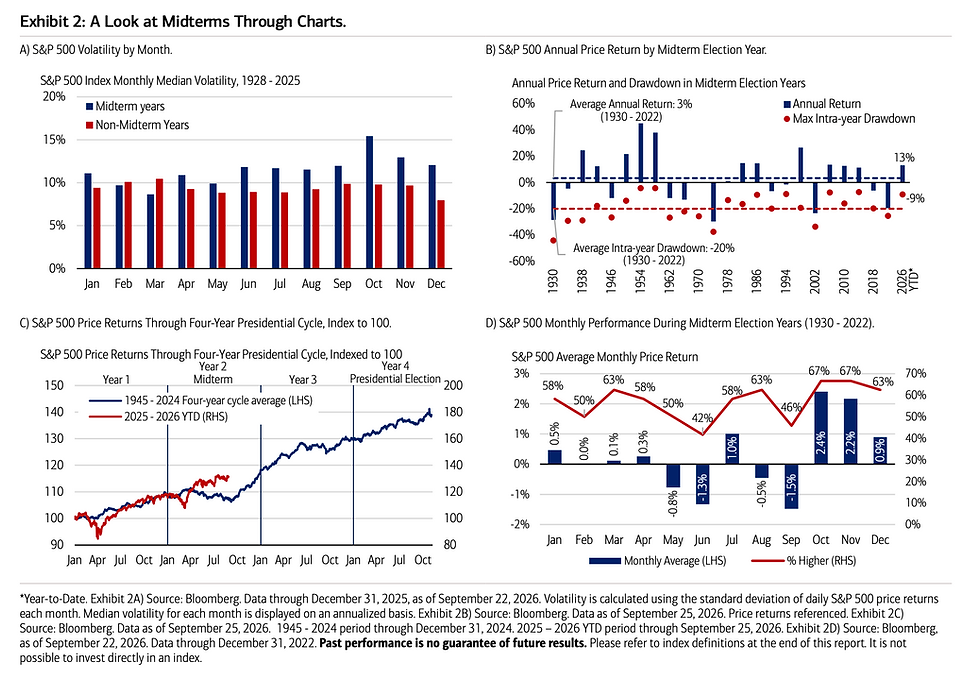
Year-to-date, the S&P 500 has increased 13%, well above the average annual return of 3% according to Bloomberg through September 25, and on pace to mark the strongest midterm election year since 2006. Taken together, 2026 has thus far defied the traditionally weak midterm year seasonal pattern, reinforcing that every election cycle is unique and historical trends may be a useful guide to navigate market volatility.
Forward performance is increasingly constructive for Equities. In the post-war period, the S&P 500 rose 100% of the time in the six and 12 months following elections, averaging 13% and 14%, respectively.6 Even narrowing the time frame to three months, markets ended higher 90% of the time. As investors push through the finish line, the last three months of the year tend to be the strongest with October standing out, ending higher 67% of the time. On average, Q4 has gained 5.6% since 1930, far surpassing the preceding three quarters of election years.7 Greater clarity about the U.S. fiscal policy path serves as a potential tailwind for investors following the election.
Volatility tends to rise during midterm years, but history suggests that reacting to short-term political uncertainty has rarely rewarded long-term investors. Over longer horizons, the data suggests Equity returns and economic strength are shaped less by election outcomes than by corporate profits, valuations, labor market conditions and capital investments. - BofA

Comments